 1192 Havendale Blvd NW Winter Haven, FL 33881

 863 297 6555
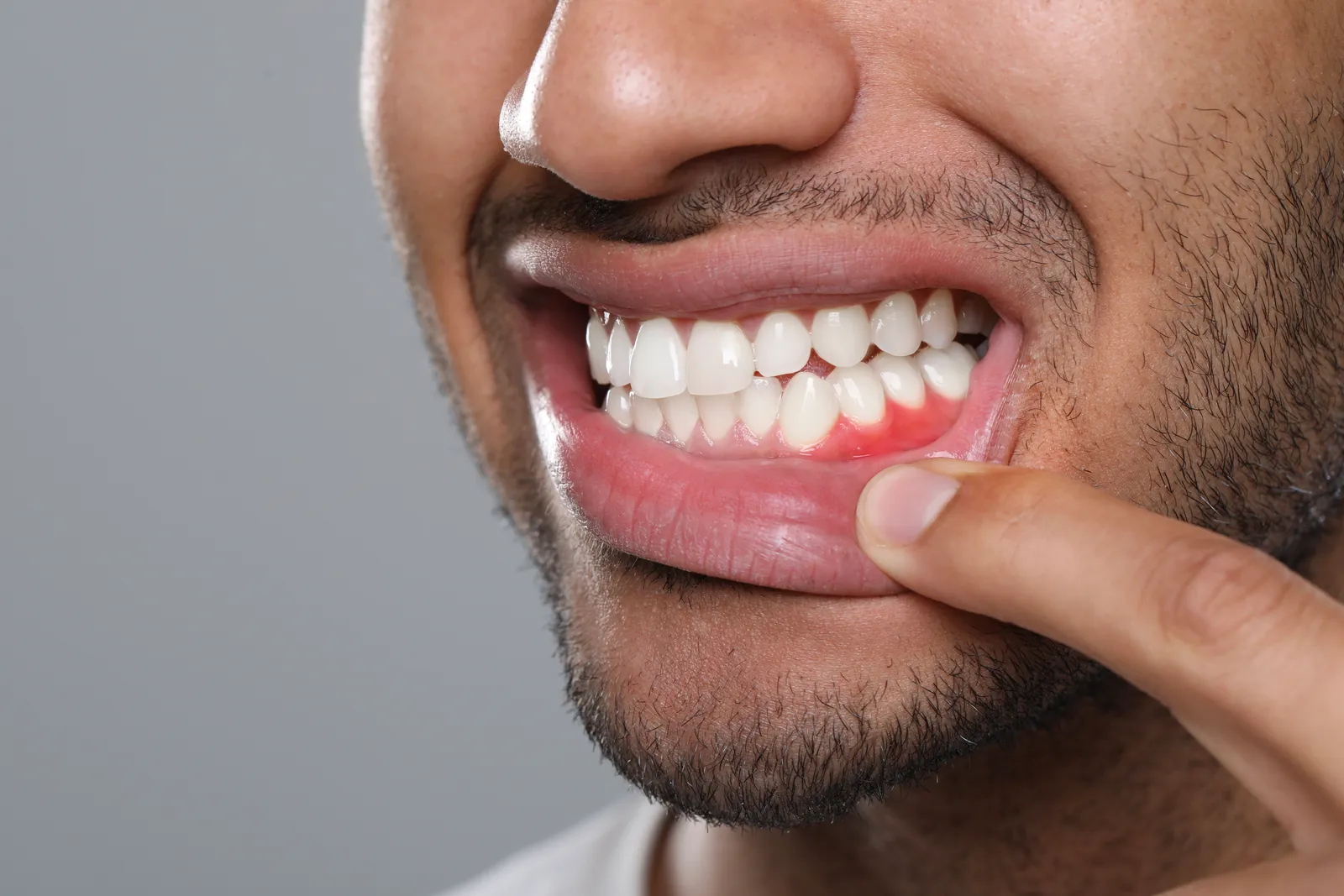
If your gums bleed when you brush, or you've noticed they look a little redder or puffier than they used to, it's tempting to brush it off-literally. Most people do. But bleeding gums are one of the clearest early warning signs your mouth gives you, and ignoring them is how a manageable problem turns into a serious one. Periodontal disease is the leading cause of adult tooth loss in the United States, and it rarely announces itself with pain until real damage has already been done.
The good news is that periodontal disease is both preventable and treatable, especially when it's caught before it progresses past the early stage. At Spring Lake Dental, we see patients at every point on this spectrum-from mild inflammation that reverses with better home care, to advanced bone loss that requires a more involved treatment plan. This article walks through what periodontal disease actually is, how we diagnose it, and the treatment options available depending on how far it has progressed.
Understanding your gum health is just as important as understanding your teeth. Gums are the foundation that holds everything in place, and once that foundation starts to erode, it doesn't grow back on its own. Let's talk about what to watch for and what we can do about it.
What Periodontal Disease Actually Is
Periodontal disease is a bacterial infection of the tissues that support your teeth-your gums, the periodontal ligament, and the bone underneath. It starts with plaque, the sticky film of bacteria that forms on teeth constantly. If plaque isn't removed through regular brushing and flossing, it hardens into tartar (also called calculus), which can't be removed with a toothbrush at all. Only a professional cleaning can take it off.
Once tartar builds up along and below the gumline, it irritates the surrounding tissue and triggers an immune response. That response is what causes the redness, swelling, and bleeding you see in the early stage, known as gingivitis. If it continues unchecked, the infection moves deeper, and the body's own inflammatory response starts breaking down the bone and ligament that anchor your teeth. That's periodontitis, and unlike gingivitis, it is not fully reversible-though it is very manageable with the right treatment.
It's worth noting that periodontal disease isn't just a dental issue in isolation. Research has linked it to cardiovascular disease, diabetes complications, and even pregnancy outcomes, since the bacteria and inflammation involved don't necessarily stay confined to your mouth. That's one more reason to take early symptoms seriously rather than waiting for discomfort to force the issue.
Warning Signs You Shouldn't Ignore
One of the frustrating things about periodontal disease is that it can progress with very little pain, especially in its earlier stages. That's exactly why routine checkups matter-many patients find out they have gum disease during a visit for dental cleanings and exams rather than because something hurt. Still, there are physical signs worth paying attention to between visits.
- Bleeding when you brush or floss. This is almost always the first noticeable sign and is frequently dismissed as normal when it isn't.
- Gums that appear to be pulling away from teeth. This "recession" can make teeth look longer and exposes sensitive root surfaces.
- Persistent bad breath or a bad taste. This often comes from bacteria thriving in pockets that have formed between gum and tooth.
- Loose or shifting teeth. This is a later-stage sign that bone support has already been compromised.
- Pus or tenderness along the gumline. This points to an active infection that needs prompt professional attention.
The Stages of Gum Disease
Periodontal disease moves through recognizable stages, and understanding where you fall helps explain why your treatment plan looks the way it does. Gingivitis is the earliest and mildest stage: gums are inflamed and may bleed, but there is no bone loss yet, and the damage is fully reversible with professional cleaning and improved home care.
Early periodontitis begins when the infection starts affecting the bone that supports your teeth. At this stage, we start to see pocket depths-the small gaps between tooth and gum-increase beyond the healthy range of 1 to 3 millimeters. Moderate periodontitis involves more significant bone loss, deeper pockets, and often visible gum recession or tooth sensitivity. Advanced periodontitis is the most serious stage, marked by substantial bone loss, loose teeth, and in some cases, teeth that can no longer be saved.
We measure pocket depth with a small probe during every exam, which is why consistent checkups matter so much-they let us catch the shift from gingivitis to periodontitis before it becomes obvious to you. The earlier we identify where you stand, the more conservative your treatment can be.
How We Treat Periodontal Disease at Each Stage
Treatment for periodontal disease is matched to its stage, and the goal at every level is the same: remove the bacterial source of infection, reduce inflammation, and stop further bone loss. For gingivitis, treatment is often straightforward. A professional cleaning to remove plaque and tartar, combined with a more thorough brushing and flossing routine at home, can resolve the inflammation within a few weeks. We may also recommend fluoride treatment to strengthen enamel that's been exposed to acidic bacterial byproducts during the inflammatory process.
Once the disease has progressed to periodontitis, a standard cleaning isn't enough because the bacteria have moved below the gumline where a toothbrush and regular cleaning tools can't reach. This is where scaling and root planing comes in-often called a "deep cleaning." Scaling removes plaque and tartar from the tooth surface and below the gumline, while root planing smooths the root surfaces so gum tissue can reattach more easily and bacteria have a harder time recolonizing. This is usually done in sections, under local anesthetic, over one or two visits.
For moderate to advanced cases, we may supplement deep cleaning with localized antibiotic therapy placed directly into deep pockets, or recommend a prescription antimicrobial rinse to help control bacterial levels between visits. In more advanced situations involving significant bone loss, surgical treatment may be necessary-this can include flap surgery to access and clean deep pockets, or bone and tissue grafting to help regenerate what's been lost. We'll always explain exactly why a given approach is recommended for your specific case rather than defaulting to the most aggressive option.
Because periodontal disease and general oral health are so closely connected, we treat it as part of a broader approach to general dentistry rather than an isolated issue. A full evaluation often includes checking for related concerns, including an oral cancer screening, since both conditions are far easier to manage when identified early.
What Happens After Treatment
Treating periodontal disease isn't a one-time event-it's the start of a maintenance relationship between you, your gums, and our team. After scaling and root planing, most patients move onto a periodontal maintenance schedule, which usually means cleanings every three to four months instead of the standard twice-a-year visit. This more frequent monitoring lets us track pocket depths, catch any new inflammation early, and remove tartar buildup before it has a chance to cause further damage.
Why the Follow-Up Schedule Matters So Much
Periodontal disease is a chronic condition in the sense that the underlying susceptibility doesn't disappear once symptoms calm down. Bacteria will always be present in your mouth, and in people who've had periodontitis, the pockets that formed-even after treatment-tend to be a little deeper and more prone to recolonization than gum tissue that was never affected. Sticking with your maintenance schedule is what keeps the disease from quietly coming back.
We also pay close attention to habits that stress the gums further, such as nighttime teeth grinding, which can aggravate already-compromised tissue and bone. If that applies to you, we may discuss options like night guards to protect your teeth and reduce added pressure on healing gum tissue while you sleep.
Preventing a Recurrence
Prevention after treatment comes down to consistency more than complexity. Brushing twice a day with proper technique, flossing daily, and using an antimicrobial mouth rinse if recommended will do more for your long-term gum health than any single advanced procedure. We'll also look at risk factors that are specific to you-smoking, uncontrolled diabetes, certain medications, and genetics all influence how susceptible your gums are to future infection, and we'll talk through any of these that apply during your visit.
For families, prevention starts even earlier. Teaching Family friendly good habits and keeping up with kid-friendly dentistry visits lowers the chance they'll deal with gum disease as adults, since early plaque control habits tend to stick for life. Think of periodontal health as something you manage continuously, not something you fix once and forget about.
Key Takeaways
- Bleeding gums are an early warning sign, not something normal to brush aside-catching gingivitis early means it's fully reversible.
- Periodontitis involves bone loss and requires professional intervention, most commonly scaling and root planing.
- Advanced cases may need antimicrobial therapy, grafting, or surgery to restore supportive tissue and stop further damage.
- Periodontal maintenance cleanings every three to four months are essential after treatment to prevent recurrence.
- Consistent home care and regular checkups are the most reliable long-term protection against gum disease.
Frequently Asked Questions
Is periodontal disease treatment painful?
Most treatments, including scaling and root planing, are done under local anesthetic, so you shouldn't feel pain during the procedure itself. Some mild soreness or sensitivity for a day or two afterward is normal and usually manageable with over-the-counter pain relief.
Can gum disease be completely cured?
Gingivitis can be fully reversed with proper treatment and home care. Periodontitis, however, is managed rather than cured-once bone and attachment loss occur, treatment stops the progression and maintains the health of remaining tissue, but it doesn't regenerate what was lost without additional grafting procedures.
How long does a deep cleaning take?
A full-mouth deep cleaning is typically split into two visits, treating one half of the mouth at a time, with each appointment lasting around an hour to an hour and a half. The exact timing depends on how much tartar buildup is present and how many areas need attention.
Will my insurance cover periodontal treatment?
Most dental insurance plans provide at least partial coverage for periodontal treatment, since it's considered a medically necessary procedure rather than a cosmetic one. Coverage details vary by plan, so our team will help verify your benefits and walk you through costs before any treatment begins.
What happens if periodontal disease is left untreated?
Untreated periodontal disease continues to destroy the bone and tissue supporting your teeth, eventually leading to tooth mobility and tooth loss. It's also been associated with broader health risks, including increased inflammation that can affect cardiovascular and metabolic health.
Taking the Next Step for Your Gum Health
Periodontal disease is common, but it's not something to treat casually once you notice symptoms. The earlier it's identified, the more conservative and comfortable your treatment can be-and the better your long-term odds of keeping your natural teeth for life. If your gums bleed regularly, feel tender, or seem to be pulling away from your teeth, that's your cue to get a professional evaluation rather than waiting to see if it resolves on its own.
Our team at Spring Lake Dental takes a measured, honest approach to periodontal care-we'll walk you through exactly what we see, explain why a given treatment is recommended, and build a maintenance plan that fits your life. Healthy gums are the foundation of a healthy smile, and it's a foundation worth protecting.