Gum Health
Protect your gums, teeth, and overall health with precise, comfortable periodontal care built around your specific stage of disease.
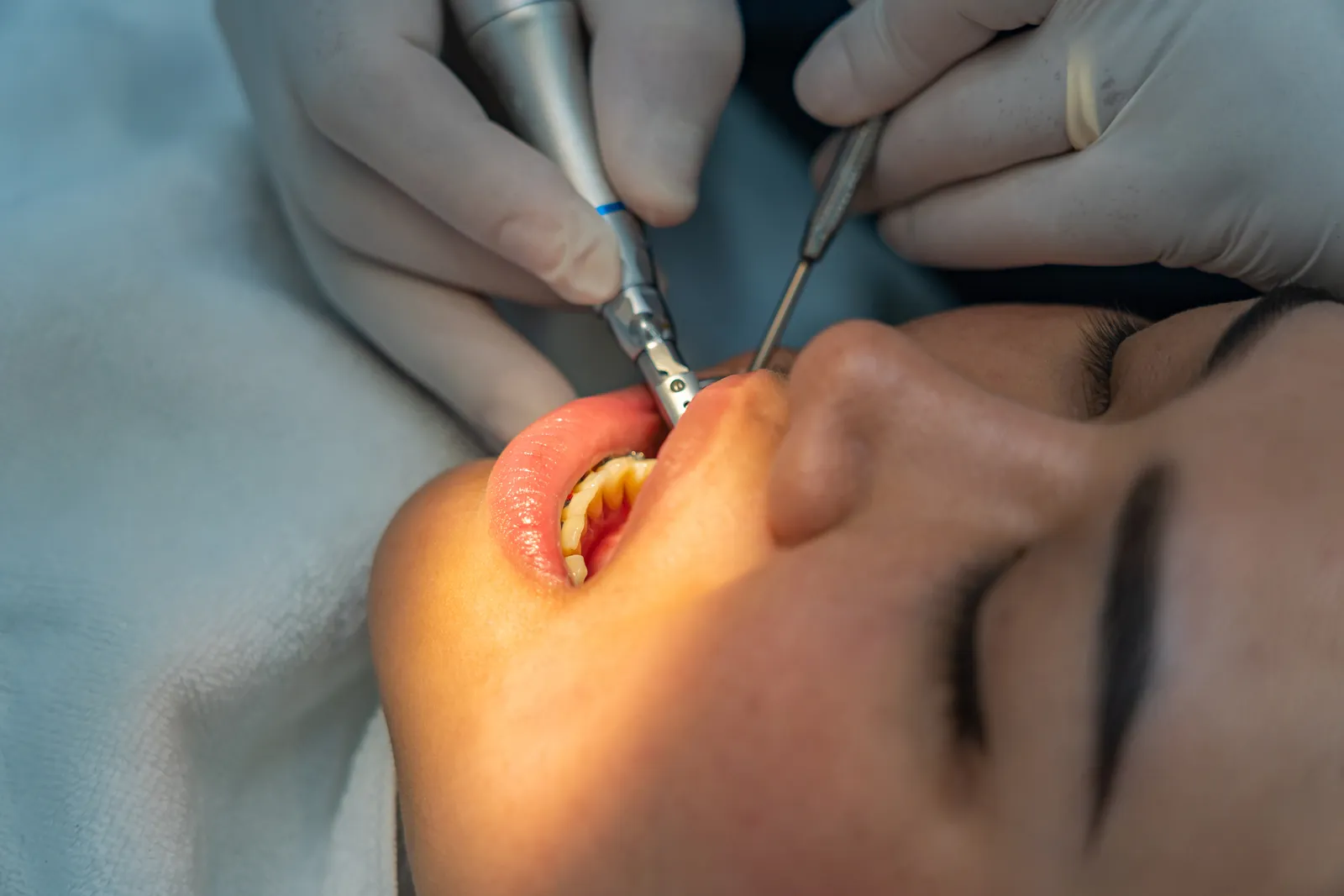
Healthy teeth depend on healthy gums and bone underneath them. When bacteria build up along the gumline, they trigger an inflammatory response that, left untreated, slowly breaks down the tissue and bone that anchor your teeth. This is periodontal disease, and it is one of the most common - and most preventable - reasons adults lose teeth. As part of the comprehensive general dentistry program at Spring Lake Dental, our periodontal disease treatment is built to catch this condition early, stop its progression, and restore a stable, comfortable foundation for your bite.
Gum disease rarely announces itself with pain in its early stages, which is exactly why so many patients are surprised to learn they have it. Bleeding when you brush, gums that look a little puffy, or breath that doesn't freshen up the way it used to are often dismissed as minor annoyances. Over time, though, these quiet signals can progress into receding gums, loose teeth, and bone loss that changes the shape of your jaw and the fit of your bite. Day-to-day life starts to shift, too - chewing becomes less comfortable, cold or sweet foods sting, and confidence in your smile begins to fade.
Our approach starts with an honest, thorough evaluation of exactly where your gum health stands. We measure pocket depths, assess bone levels with digital imaging, and talk openly with you about contributing factors before recommending a plan. Whether you need a straightforward deep cleaning or a more involved course of periodontal therapy, every recommendation is matched to the actual severity of your condition, not a one-size-fits-all protocol.
Gum disease shows up differently from one person to the next, and symptoms can be subtle enough to overlook for months. Paying attention to the changes below gives you an early opportunity to get evaluated before infection spreads deeper into the supporting bone.
Because periodontal disease progresses quietly, a thorough professional evaluation is the only reliable way to know exactly where you stand. Catching it in its early, reversible stage means a far simpler treatment path than addressing advanced bone loss later on.
Gum disease is rarely caused by a single factor. More often, several influences compound each other over time, which is why our evaluation looks at your overall health picture rather than just the teeth themselves.
Bacterial plaque that isn't removed daily hardens into tartar, which irritates gum tissue continuously and cannot be brushed away at home.
Smoking and vaping reduce blood flow to gum tissue, masking symptoms while slowing healing and allowing infection to advance undetected.
Some patients are predisposed to a stronger inflammatory response to bacteria, making them prone to gum disease even with reasonably good hygiene.
Elevated blood sugar impairs the body's ability to fight infection and heal tissue, which allows gum disease to progress more aggressively.
Some prescriptions reduce saliva flow or cause gum overgrowth, both of which make plaque control more difficult and gum disease more likely.
Pregnancy, menopause, and other hormonal shifts can increase gum sensitivity and inflammation, requiring closer monitoring during these periods.
Teeth that overlap or sit at awkward angles create spaces that are harder to clean thoroughly, giving bacteria more places to collect undisturbed.
Every periodontal case is different, so we build your treatment around what your gums and bone actually show us - never a generic template. Here's how a typical course of care unfolds at Spring Lake Dental.
We start by listening to your concerns, reviewing your health history, and discussing any symptoms you've noticed, from bleeding gums to bite changes.
Using digital imaging and precise pocket-depth measurements around every tooth, we map exactly where bone and attachment loss has occurred.
Based on severity, we recommend scaling and root planing, laser-assisted therapy, or a maintenance schedule, explaining the reasoning behind each recommendation.
Treatment is delivered with local anesthesia as needed, careful technique, and a pace that keeps you comfortable while we remove bacteria from beneath the gumline.
We schedule periodontal maintenance visits more frequently than standard cleanings, tracking pocket depths over time to confirm your gums are stabilizing.
Treating gum disease isn't about masking a symptom for a few weeks. It's about restoring a stable foundation that keeps your natural teeth secure and functioning comfortably for years ahead.
Once bacterial deposits are removed below the gumline, swelling calms down and bleeding during brushing typically resolves within a few weeks.
Stopping active infection halts further bone loss, helping teeth stay firmly anchored instead of loosening over time.
With bacterial colonies disrupted and pockets reduced, chronic bad breath linked to gum disease noticeably improves.
As inflammation subsides and teeth tighten back up, everyday chewing feels steadier and less tender around previously sore areas.
Healthier gum color and tighter tissue around teeth restore a more natural, confident appearance when you smile or speak.
Because gum inflammation has been linked to heart and metabolic health, bringing it under control supports your wellbeing well beyond your mouth.
Once gum disease progresses past its earliest stage, bacteria and hardened tartar collect in pockets that form between the tooth and gum tissue. A toothbrush and floss simply cannot reach these areas, which is why home care alone is not enough to reverse established periodontal disease. Scaling and root planing - often called a deep cleaning - uses specialized instruments to remove these deposits from root surfaces several millimeters below where the gum has separated from the tooth.
This process also smooths the root surface itself, which discourages bacteria from reattaching as quickly and gives inflamed gum tissue the chance to heal and reattach more snugly against the tooth. In cases of more advanced disease, we may recommend laser-assisted therapy to target bacteria with greater precision and encourage faster tissue recovery with less discomfort.
Left unaddressed, these pockets only deepen, bone loss accelerates, and teeth gradually lose the support that keeps them stable. Addressing the problem directly at this structural level is what allows your gums to genuinely heal rather than simply feel better for a short while.
Professional treatment does the heavy lifting, but consistent daily habits keep your gums stable once they've healed. These simple practices make a measurable difference over time.
Angle your brush toward the gumline for a full two minutes to disrupt plaque before it hardens into tartar.
Flossing reaches the tight spaces between teeth that brushing misses, where gum disease often takes hold first.
A rinse recommended by our team can help reduce bacterial load in areas that are harder to clean with a brush alone.
Cutting back on smoking or vaping improves blood flow to gum tissue and significantly speeds healing after treatment.
Keeping diabetes well controlled helps your body fight gum infection and supports faster, more complete tissue healing.
Periodontal maintenance cleanings every three to four months catch new buildup before it causes renewed inflammation.
These habits make a real difference, but they work alongside professional care rather than replacing it. Ongoing monitoring by our team remains the only way to confirm your gums are staying stable long term.
"We never rush a patient into treatment they don't fully understand. Gum disease can feel overwhelming to hear about, so we walk through exactly what we're seeing, why it matters, and what the simplest path back to healthy gums looks like for you."
Answers to the questions we hear most often about periodontal disease treatment at Spring Lake Dental.
BOOK YOUR VISIT
Join the FL 33881 families who trust Spring Lake Dental. New patients and emergencies are always welcome.
 1192 Havendale Blvd NW Winter Haven, FL 33881

 863 297 6555