General Dentistry
Custom-fitted protection engineered to shield your teeth, jaw, and smile from grinding, clenching, and contact-sport impact.
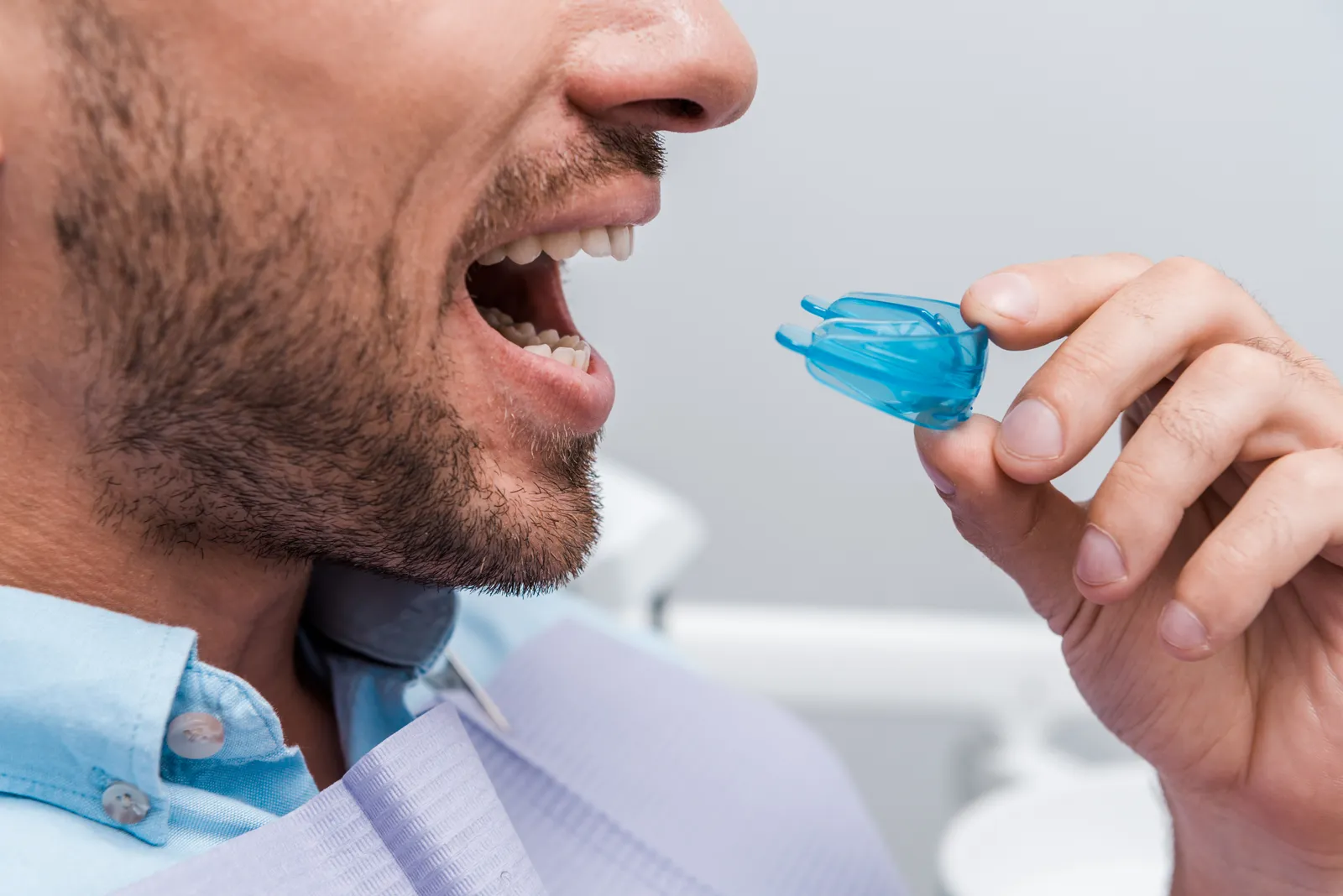
Grinding, clenching, and contact sports put real force on your teeth, often while you are asleep or too focused on the game to notice. Over months and years, that pressure wears down enamel, loosens fillings, and can crack or chip teeth that took a lifetime to maintain. A mouth guard creates a buffer between your upper and lower teeth, absorbing that force before it reaches the structures that matter most.
At Spring Lake Dental, we treat mouth guards as a core part of our General Dentistry program because prevention is almost always simpler and less costly than repair. Store-bought boil-and-bite guards are a reasonable stopgap, but they rarely sit against your gum line correctly, which means they shift during the night, feel bulky, or get chewed through within weeks. A custom guard is molded from an exact impression or digital scan of your mouth, so it stays put, breathes easier against your gums, and holds up under real pressure.
We also look at why the wear is happening in the first place. Grinding tied to stress, a misaligned bite, or an airway issue during sleep deserves a conversation, not just a piece of plastic. Our team walks through your symptoms, examines your bite, and designs a guard that addresses your specific situation, whether that is nighttime bruxism, athletic contact, or both.
Teeth grinding and clenching do not always announce themselves with pain. Many patients only discover the damage during a routine checkup, long after their teeth or jaw joints have taken a hit. Watch for the following patterns and bring them up at your next visit so we can examine your bite closely.
If any of these sound familiar, an exam now can prevent a far more involved repair later. Worn or fractured teeth rarely heal on their own, and joint strain tends to compound the longer it goes unaddressed.
Grinding and clenching rarely come from a single source. Most patients are dealing with two or three overlapping factors at once, which is why a thorough conversation during your visit matters as much as the physical exam itself.
Daily stress often shows up physically as jaw clenching, especially during sleep when conscious control disappears. The muscles around the jaw tighten repeatedly through the night, wearing enamel with every cycle.
When upper and lower teeth do not meet evenly, certain teeth absorb more pressure than others. This uneven load accelerates wear and can trigger grinding as the jaw tries to find a comfortable resting position.
Grinding is sometimes the body's response to a partially blocked airway during sleep. Patients with snoring or sleep apnea symptoms often grind more frequently as the jaw shifts to open the airway.
Any activity with a risk of a fall, collision, or elbow to the face increases the odds of a chipped, cracked, or knocked-out tooth. Athletic guards absorb that impact instead of your teeth.
Both substances are known to increase muscle activity and lighten sleep quality, which raises the likelihood of grinding episodes overnight, particularly when consumed close to bedtime.
Some antidepressants and stimulant medications list bruxism as a known side effect. If grinding began after a medication change, it is worth mentioning at your appointment.
An irritated or displaced jaw joint can create a cycle where discomfort leads to clenching, and clenching leads to more joint strain, making the problem progressively harder to ignore.
Every mouth guard we build starts with understanding your mouth and your habits, not just taking a mold and sending it to a lab. Here is what to expect from your first visit through your fitted guard.
We start by talking through your symptoms, sleep habits, stress levels, and any sports or activities that put your teeth at risk, so we understand the full picture before recommending a guard type.
Our team examines your bite alignment, jaw joint movement, and existing wear patterns, checking for early signs of enamel loss, cracked restorations, or TMJ tenderness that need attention.
We capture an exact impression of your teeth and gum line, whether through a digital scan or a traditional mold, so your guard is manufactured to fit your mouth and no one else's.
Your guard is fabricated from durable, medical-grade material matched to your intended use, whether nightly wear for grinding or heavier-duty protection for sports. We check the fit in person and adjust the edges for comfort.
We check in at your regular cleanings to confirm the guard still fits well, inspect for wear, and discuss whether your symptoms have improved or if adjustments are needed.
A properly fitted mouth guard does more than cushion your teeth for a few hours. Over time, it changes how your whole jaw system functions, with effects that reach well beyond the mouth.
By distributing bite force evenly across a protective layer, a custom guard slows the gradual flattening and chipping that untreated grinding causes over years.
Patients who wear a night guard consistently often notice a drop in tension headaches, since the muscles around the jaw no longer have to fight a hard bite surface all night.
With less muscle strain and fewer grinding episodes interrupting the night, many patients report waking up feeling more rested rather than sore or fatigued.
If you have crowns, veneers, or fillings, a guard shields that investment from the repeated stress that can crack or loosen restored teeth.
An athletic guard built to your exact bite stays secure during play, letting you focus on the game instead of adjusting a loose, uncomfortable piece of plastic.
Custom materials hold up far longer than store-bought versions, meaning fewer replacements and a better return on the investment over time.
The forces generated during a grinding episode can exceed the pressure applied during normal chewing by a significant margin. Because this happens while you sleep, with no conscious control to ease up, the jaw muscles clamp down with far more intensity and for far longer stretches than they would during the day. That repeated, unmonitored force is what separates bruxism from ordinary wear and tear.
Over months, this pressure thins enamel at the biting surfaces, flattens the natural contours of molars, and can fracture cusps that once handled normal chewing without issue. The jaw joint absorbs stress as well, which is why many patients with long-term grinding eventually develop clicking, popping, or restricted movement when opening wide. Left unmanaged, this strain can progress into chronic jaw discomfort that is far more difficult to resolve than the original grinding habit.
A custom guard interrupts that cycle by giving the jaw a stable, even surface to rest against, which reduces both the force transmitted to the teeth and the strain placed on the joint itself. It will not eliminate an underlying stress or sleep issue on its own, but it buys your teeth and jaw real protection while any root cause is addressed.
A well-maintained guard lasts longer and stays more hygienic. These habits keep your investment in good shape and help us track whether your symptoms are improving.
Skipping nights undercuts protection. Make it part of your nightly routine, the same as brushing or flossing.
A quick rinse with cool water removes saliva and bacteria before storage, keeping the material fresh and odor-free.
A hard, vented case protects the guard from pets, pressure, and heat that can warp the fit over time.
Heat can distort the material, so clean with lukewarm water and keep it out of a hot car or sunny windowsill.
We inspect your guard for thinning or cracks at your regular visits, confirming it is still doing its job properly.
Simple steps like reducing evening caffeine or trying relaxation techniques can lower grinding frequency alongside your guard.
These habits support the work your guard is doing, but they are not a substitute for professional monitoring. Let us know right away if you notice cracking, a change in fit, or new jaw discomfort.
"We never want a patient to lose a tooth to something as preventable as grinding or a sports mishap. A guard that actually fits is one of the simplest ways we protect a smile for the long run."
Answers to the questions we hear most often about custom mouth guards, fit, and care at Spring Lake Dental.
BOOK YOUR VISIT
Join the FL 33881 families who trust Spring Lake Dental. New patients and emergencies are always welcome.
 1192 Havendale Blvd NW Winter Haven, FL 33881

 863 297 6555